01
The problem
Technical animations often require rebuilding the same objects: axes, points, neurons, relationships and transitions. Repetitive work slows creation and fragments visual decisions. LINIA turns these recurring needs into primitives and composition tools.
02
My role
I design and develop the primitives, their parameters, the visual editor and scene composition. I also define shared color, typography and motion rules for animations.
03
Constraints
- Keep geometric representations readable and faithful to the concept.
- Reuse primitives across scenes and formats.
- Drive motion by frames for reproducible renders.
- Maintain visual consistency across content.
04
Architecture & pipeline
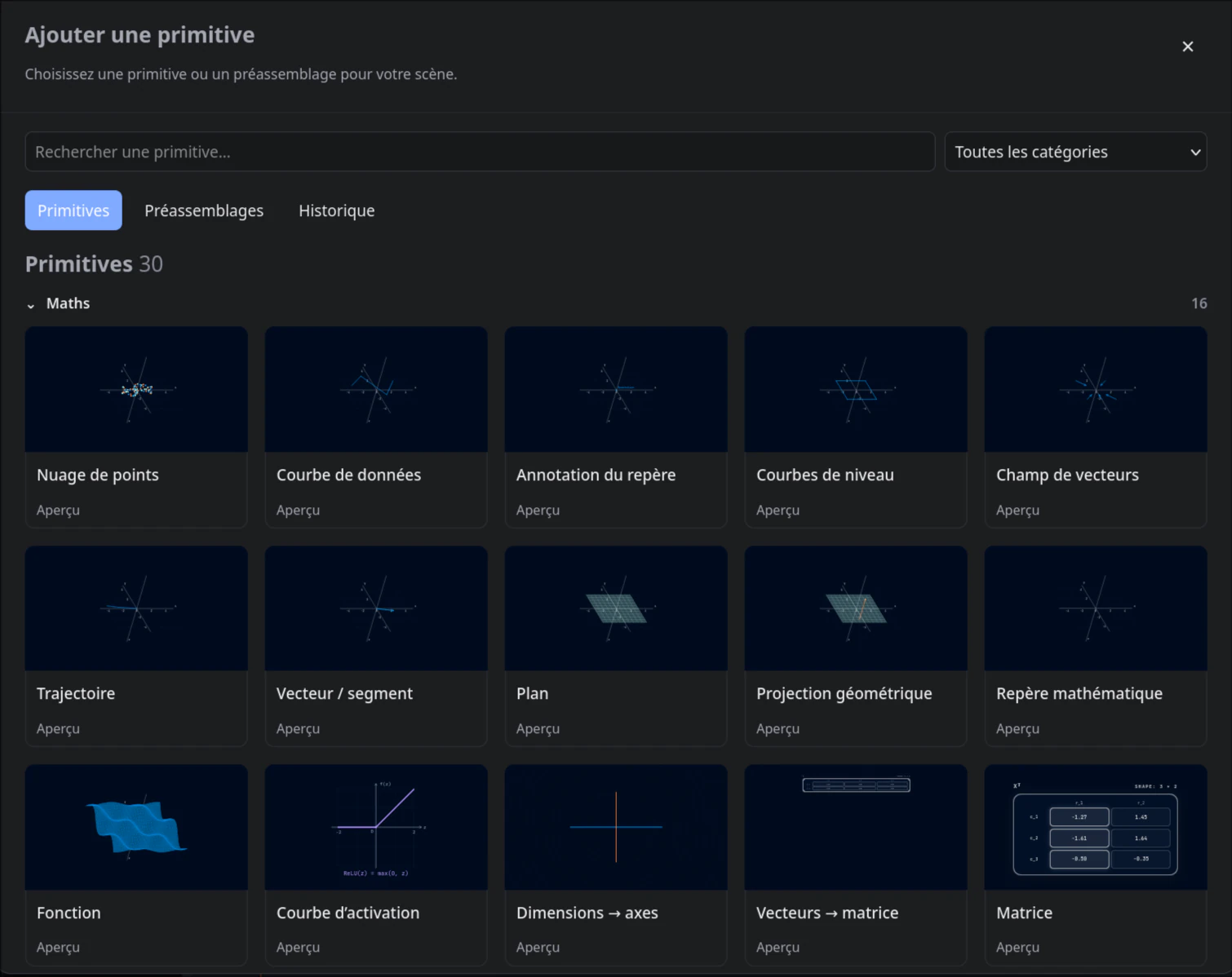
- Define shared parameters and styles for primitives: axes, functions, matrices, neurons and relationships.
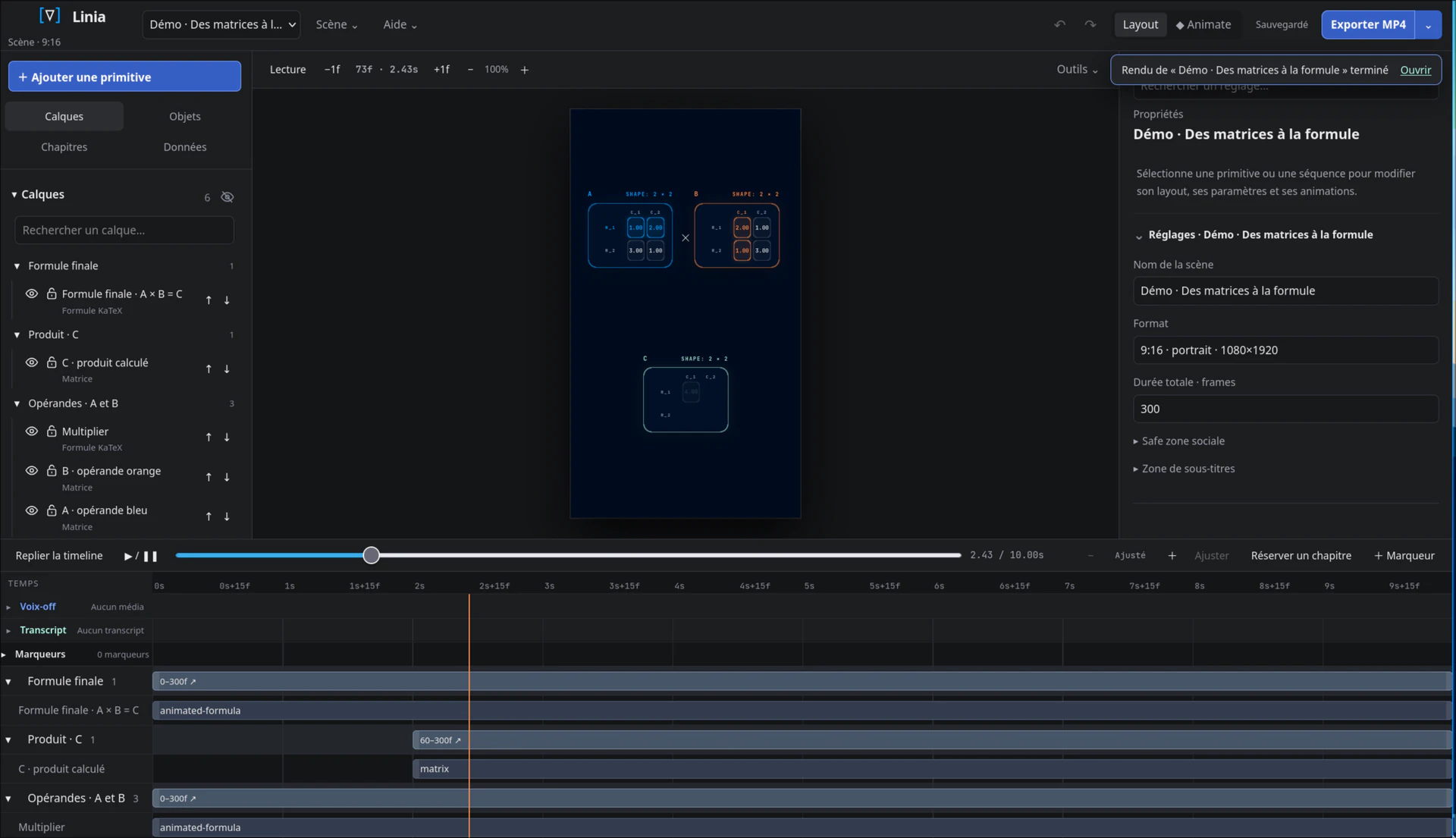
- Compose React primitives in editor scenes and arrange their animations on a timeline.
- Compute transformations from the current frame using Remotion.
- Preview scenes and produce video renders from the same composition.
05
Decisions & iterations
React and TypeScript define each primitive’s parameters and let components be reused across scenes.
Remotion computes scene state at each frame; previews and video renders use the same composition.
Shared styles avoid redefining colors and typography for every animation.
The editor exposes parameters and a timeline to compose scenes without manually coding every animation.
06
Results & limitations
A visual editor, timeline and primitive library for composing, previewing and rendering Math / ML animations.
Visualizations of gradients, neurons, embeddings, attention and sequential architectures reuse this foundation.
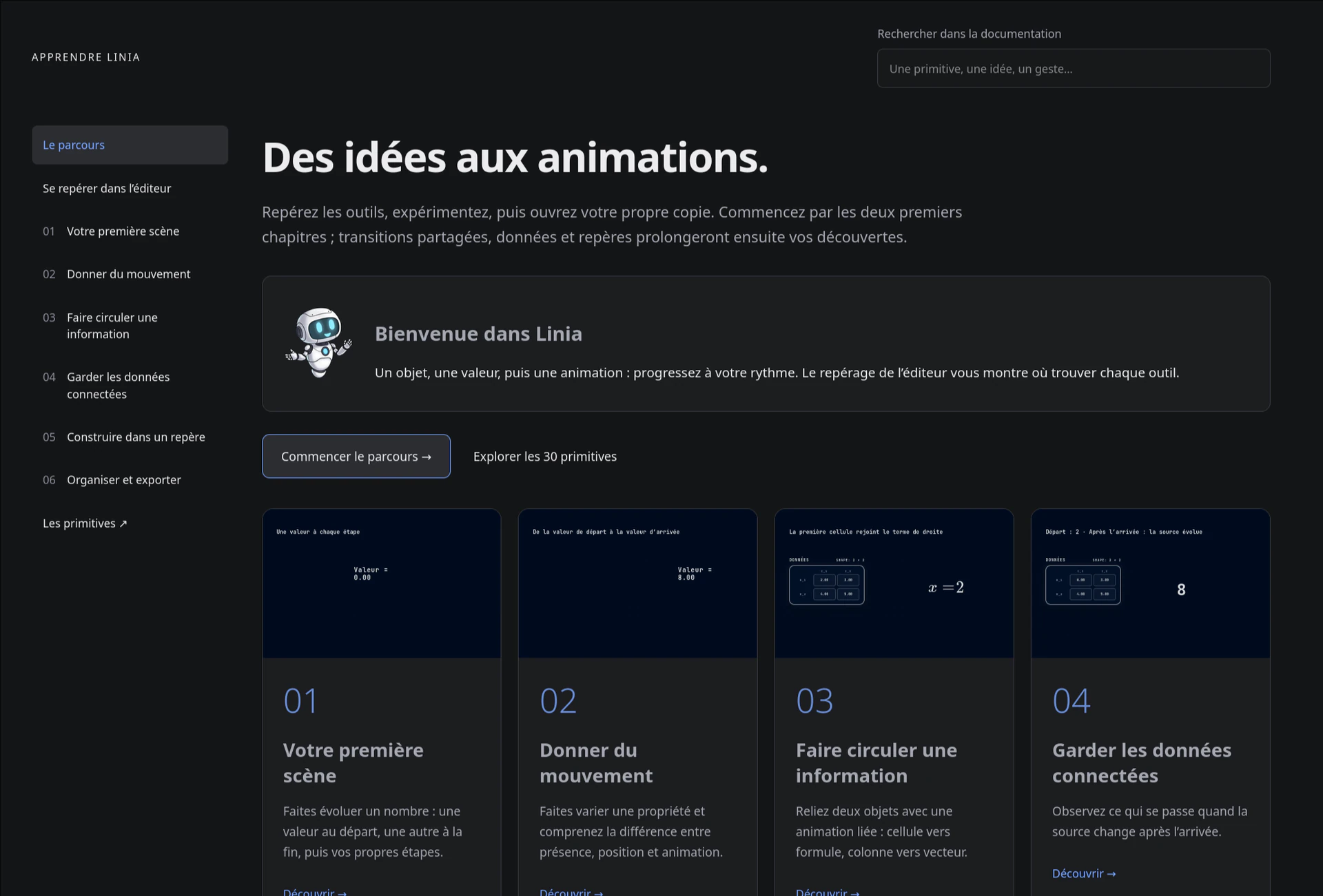
Tutorials support onboarding; installation instructions and examples still need preparation for use outside my environment.
07
Next iterations
Prepare the open-source release: installation instructions, documentation, reproducible examples and a license. Extend primitives to interactive technical articles, keeping the text readable independently of the interactions.
08
In pictures